'Just Mercy' by Stevenson

Sunday, January 4, 2015

I would like everyone to read this book. Please, please!

I first heard Bryan Stevenson speak at the Justice Conference in 2014. If you would like to get an idea of what Just Mercy is about, watch his presentation here:


Bryan Stevenson from The Justice Conference on Vimeo.

Stevenson is a capital defense attorney, based primarily in Alabama, who has over 25 years experience representing juveniles sentenced to life imprisonment as well as adults awaiting execution on death row. His book includes client stories, some memoir, and a sweeping look at the criminal justice system and prison life in the U.S.

Stevenson is a powerful storyteller, a tireless advocate, and he offers an astounding Christian witness in the work to which he has dedicated his life. I could barely put this book down.

(Stevenson is a also graduate of Eastern University and Harvard. Woop! *I went to Eastern.)

I highly recommend Just Mercy. Again, I think every American ought to read it. Please pick up a copy and share your thoughts. Stevenson provides a compelling call to action for us all.

'The Color of Water' by McBride

I just finished reading James McBride’s memoir and piece dedicated to his mother, The Color of Water. A friend had recommended this book to me for years, and I finally picked it up for the Christmas break. I am so glad that I did!

McBride also wrote The Good Lord Bird, winner of the National Book Award for 2013, which I highly recommend to history nuts or lovers of historical fiction.

Raised orthodox Jewish and an immigrant to America from Poland, McBride’s mother flees from her oppressive family structure in the South to get lost and find a future in the bustle of New York City in the 1930s and 40s. A white woman, she marries an African American man who introduces her to the Christian faith. Together, they build the foundation for a remarkable family. Twelve siblings comprise the household in which McBride is raised in New York. Living meal-to-meal, day-by-day, McBride's family is fueled by his mother’s resolve, nonstop movement, and incredible strength. Her wit and McBride's honest reflections string together this tight narrative that will have you instantly hooked.

I recommend this book to everyone who loves a good story, and also exploring the many angles of racial identity in America.

The Hundred-Foot Journey

Being at home in San Diego for Christmas meant we got to catch some of the more recent talked-about flicks, and all with the ease of a quick Redbox run or Amazon Prime rental. Whoa!

Christmas Day, our family watched The Hundred-Foot Journey, a comedy about an Indian, restaurant-owning family that travels through Europe in search of the perfect location for their new culinary venture. They settle in small-town France, but with some obstacles to overcome: the town is already somewhat xenophobic, plus a renowned, classically French restaurant is situated just one hundred feet from their front door.

Everything takes a turn when the prominent son and chef of the family, Hassan, starts to take an interest in uncovering the hidden secrets of French cuisine, with the help of a young chef-in-training, Marguerite.

In my view, The Hundred-Foot Journey scores major points for being a fun comedy/drama that covers unique territory – it’s the first French/Indian film I have seen. It will also leave you hungry and anticipating your next delicious meal!

Tarps, Tents

Tuesday, December 30, 2014

This 16-minute film, Tarps, Tents, Houses, Homes was produced by MCC Haiti earlier this year (2014), in partnership with the Haiti Housing Collective. The film explores the recent state of tent camps in Port-au-Prince, nearly five years after the earthquake. It also highlights some failed and successful housing programs for victims, and sketches a narrative that explains causes for the earthquake's devastation.

Hear strictly Haitian voices explore and explain some of the current nuances of Haiti's housing crisis, nearly 5 years after the earthquake:


Christmas prayer

Tuesday, December 23, 2014

We have enjoyed following the Advent calendar this season, with the aid of readings and meditations from a guide given by a friend. Taking us through the troughs and peaks represented in the cycle of this holy season, this time has reminded of the darkness, yet the joy and anticipation inherent in the daily living of the Christian faith.

It starts with a recognition of the brokenness of this world, and the brokenness sometimes hidden in our lives. We realize that we need a Savior. We are then filled with joy in thinking of a future where every pain and heartache is extinguished, and a deep gladness and wonder as we think on God's promises embodied among us. Emmanuel. The baby Christ came to us in an utter miracle, born to humble hands to serve us all. The pages of Scripture are thick with this testimony.

In the backdrop of this particular Advent season, we have known of the protests playing out across the U.S. The streets of Port-au-Prince have also been protest-ridden. People are angry, crying out for something better than the current political gridlock and historic antipathy from those in power. 

Will you join us in prayer this Christmas? Let us pray, in this season of Light and Hope, for God's peace to be evident, binding up the brokenhearted, turning hearts towards Him, and creating a way forward where there seems to be no way, a way that bears witness to His Kingdom and Truth. Amen.

I'm including here a picture of a Christmas tree we saw in Port-au-Prince this month; a symbol of the season.


And here is a picture I took yesterday of the beach. Something about the beauty, constancy, and rhythm of the waves makes me think of the cycle of longing, anticipation, and joy we experience this season.


Some daily 'habits'

Tuesday, December 16, 2014

A friend asked for some insights into 'daily living' here; habits or activities that may be unusual for us. After living here for 5 months now and 'going through some of the motions' for several weeks now, I admit I had to think on it for a second! (Or rather, a few weeks :) Some small things:


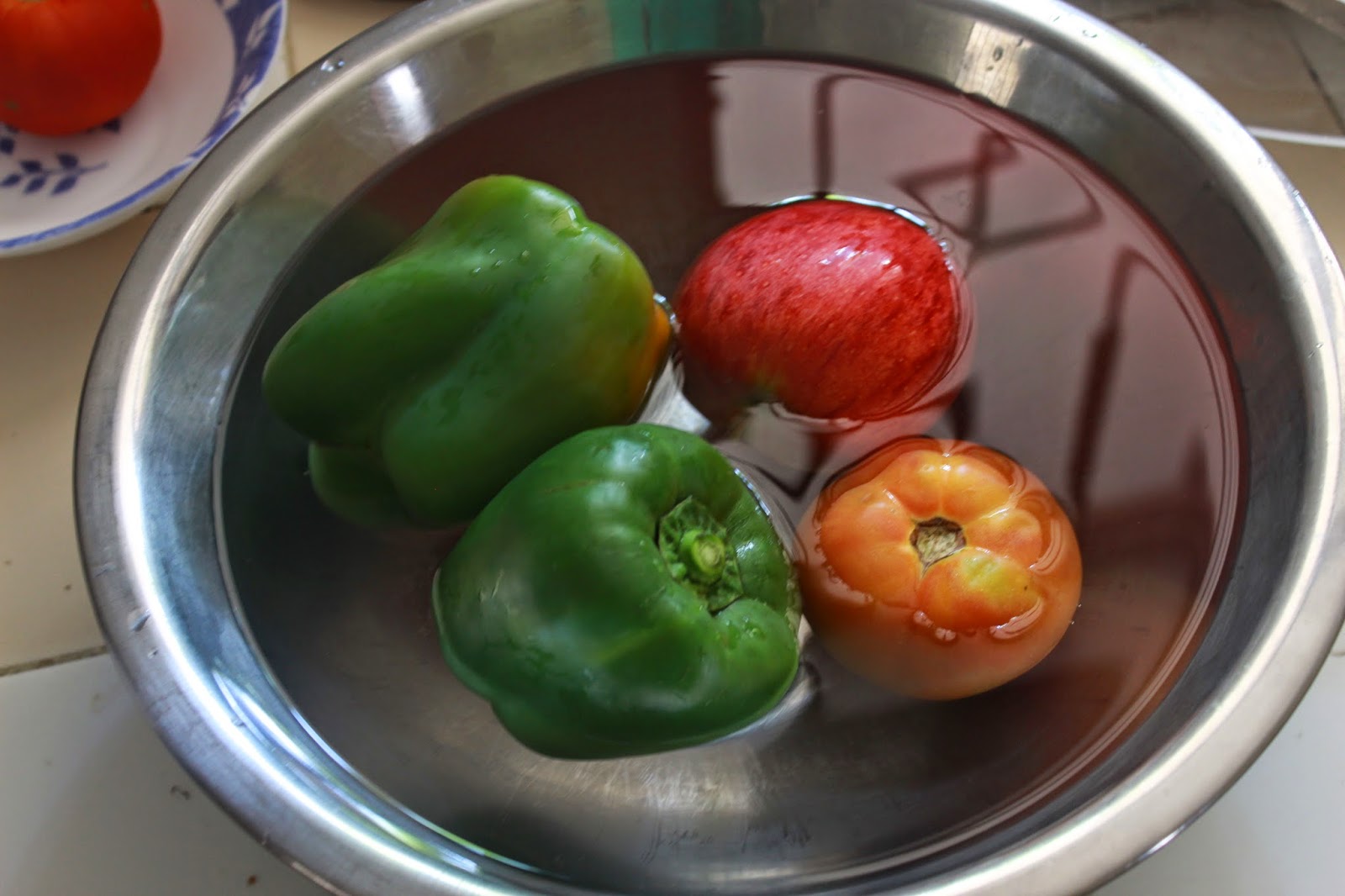
Veggie soak. Bleaching or soaking our veggies in vinegar water before eating them raw or cooking them. This isn't that bad, but just a regular precaution. It has taken some getting used to. And I admit I'm still not sure about what does and doesn't 'need' to be soaked.

On October 10, we actually had a dear friend come and visit us for one week. Ama grew up in West Africa, and she is accustomed to many of these food preparation practices. Her visit 1) got me digging into our Mennonite cookbooks more intentionally, to make sure we were providing some well-rounded meals while she was here! and 2) helped me gain confidence cooking with a lot of produce and also experimenting with new recipes, given the 'raw materials' on hand.

I would say that, overall, our seeming limitations when it comes to cooking (i.e. also not having different strengths on our oven burners - high heat, or, high heat!) have actually helped me to experiment and make some healthier, yummier meals overall (can't rely on those delicious premade sauces and other wonders at Trader Joe's or Aldi! )

Our friend Ama. I really like this picture, but you can actually see her face below.


Goats. What do you do when the weeds are taking over your yard? Why, borrow your boss's goats to eat the weeds, of course! But when one is pregnant and whiny the whole time, they don't focus as much on eating, and the progress may not be as impressive as you would have thought. It was worth a shot, though! And not uncommon practice in Haiti apparently. I like the idea -- a goat-borrowing system for all your pressing yard-care needs.


Yard burning. I am not accustomed to setting a fire in our yard multiple times per week, but it's what you gotta do here! Burning yard waste and kitchen waste is a regular necessity, because it's too much trouble to try fitting it all into our little trash bin I guess. The smell of smoke from neighbors' fires wafts into our room some nights. It's not too bad -- except when there's more than leaves and paper products being burned... yuck!


Reflections on our first Konbit

Saturday, November 15, 2014

by Ted


Two tree nursery committee members planted a "small forest" project (behind)
using the traditional konbit
It starts with a drum and ends with rum, but it’s what happens in between that makes konbit the cultural institution that’s helped the Haitian peasantry survive for centuries against all odds. Konbit, the Haitian Kreyòl word used for just about any collective effort, usually refers to the equivalent of a Haitian barn-raising. It’s a work exchange, when a community member calls upon his or her neighbors to join a work party to help clear, plant, weed or harvest their fields. It’s all completed with the expectation that the work will be reciprocated when a member of the work party has a similar need.

We just returned from our first Mennonite Central Committee (MCC) konbit, a quarterly staff gathering. While there was no back-breaking labor involved, there are more similarities between a traditional konbit and MCC’s than you might think.

Almost all of the MCC Haiti team at our MCC konbit

Hard work. A konbit in the field usually starts as the sun is rising and lasts until mid-day or early afternoon. Our konbit is really a series of meetings where every member of our team is able to speak his or her mind. Two of the three days involved eight hours of meetings like this, all in Kreyòl. We agreed on an agenda together, reported on our activities, and posed questions to puzzle through difficult issues.

A coming-together. Beyond work in the fields, konbit has survived because it is a social scene: a chance to trade stories and gossip, complain and sing. Our konbit is a chance for MCC’s Port-au-Prince and Desarmes teams to reunite. Though we sometimes cross paths in the intervening months between konbit, this was a chance to really catch up: to meet new staff members; to see how a staff member’s baby has grown; and to deepen relationships.

Music. Drums, bamboo or conch-shell horns, flutes: the chef of the konbit in the fields often employs a band to play these instruments throughout the day. The music serves to set the work team’s tempo and keep up the party-like atmosphere. Our konbit started each morning with the sounding of the drum and Kreyòl worship songs that prepared our hearts and minds for the work ahead.

* Listen to our team singing "Mesi Jezu" at Konbit
(just press play)

Food. Any good konbit starts and ends with food. Maybe a cup of sweet coffee and bread to begin, and a stomach-bursting meal at its end. The Desarmes team’s cook Lucilla made hearty meal after hearty meal, providing the foundation for times that were fit to laugh and share and enjoy one another’s company.

Respect and Mutuality. Both types of konbit grow from the recognition that we need each other. There’s a common Kreyol proverb that’s translated as “Many hands make the burden light,” and as I reflect on our first konbit experience, I’m reminded of a command in Galatians 6:2, “Bear one another’s burdens, and so fulfill the law of Christ.” In sharing the load, we are able to see our hearts resonate with Christ’s own love and concern for others, and we’re further knit together as a community.

The rum. Just kidding. While many traditional konbits do see the bottle passed around throughout the day and end in a big rum-drenched party, ours did not. We instead closed out ours with fritay--fried goat, pressed plantains, and pikliz--a crowd-pleasing combination of foods meant to mark a special occasion, of which it most definitely was.