Showing posts with label dominican republic. Show all posts

The Colonial District, Day Two

Thursday, December 3, 2015

Day Two of touring in the Colonial District held as many pleasures as the first. Yes, the downpour of rain came again, but we were prepared this time! Hours of relaxing and sipping good coffee were already scheduled into our day before the wetness began :)

After dining on a charming plaza (the one filled with pigeons across from the Catedral Primada de America), we headed straight for the two museums remaining on our bucket list for the trip. We were ready to hit the history-hunting straight away!


The Ozama Fortress, built by the Spanish in the 16th century to keep the French and English at bay, looms large over the old city wall, facing out to the Ozama River and the Caribbean sea. Disturbingly, the fortress was used in recent history by the 20th century dictator Trujillo, mostly to jail and torture his political prisoners. :( We dropped the six bucks or so for a brief guided tour, definitely worth it as nothing at all was marked.


Next up, the much talked about Museo de las Casas Reales. It houses quite a random collection of historical artifacts (mostly old furniture), plus some brief history of the early Spanish colonization of Hispaniola. I was always wanting the audio guide to go a little further. ''This room features a very rare and important Renaissance-style wood carving of the Virgin Mary and the twelve disciples.'' Aaaand, that would conclude the description of the entire room. More context, please?! It's okay; I got over it :)


This museum was once the home of Diego Colón, Chris' son (yes, he also lived in the Alcazar de Colon, which we visited the day before.) In the century, the dictator Trujillo set up shop and ran the country from this historic site. (That guy liked hearkening back to the D.R.'s colonial history, didn't he?) The museum is now home to... these beautiful peacocks! Who enjoy strutting around the cobblestone courtyard.

Strike a pose.


I enjoyed capturing the beautiful flourishes of Spanish colonial architecture surrounding this museum, as well as the small charms of the streets on my Instagram throughout the trip.

Lunch was had at a snazzy outdoor cafe type of place (called Zona Zuna or something like it), where we indulged in... you won't believe it... nachos and tacos! They were divine, I'm tellin' ya.

In the afternoon, we explored the city a bit by car. Our attempt to find a park entrance that would lead us to some moderately well-reviewed ancient caves had us driving in circles for a bit, with no eventual success. Perhaps the most interesting site we ''bumped into'' on our trek was this church, Santa Barbara's.


There were actually old churches tucked away in every corner of this district!

After the fun drive, we fit in some napping, some coffee-sipping, and then back to dine at the restaurant where we started the day! Why not? All in all, I couldn't have asked for a more chill, culturally informative, and historically pleasing couple of days. We look forward to exploring other bits of the country!


Our first Escapades into the Dominican Republic

Saturday, November 14, 2015

Our trip to the D.R. last week exposed us to a whole new world that is just a few hours away from us, across the border that separates these two different but forever linked countries that share the island of Hispaniola.

We traveled with MCC companions to meet with Mennonite pastors in the eastern town of Padre Las Casas and in the capitol of Santo Domingo, then Ted and I had two and a half full days to explore the finer parts of the city together. Rain and grey skies aside, it was a wonderful and relaxing dip into history, plus a cool cultural experience for us both!

First, we got to experience the Old World meets New World fusion in the architecture of the Catedral Primada de America, the oldest church in the New World that is still in use. The cathedral is parked right in Parque Colon, so named for Christopher Columbus (who is really Cristóbal Colón in Spanish.)

Though Columbus first landed in the north and western parts of the island, he set up shop in several spots in Haiti and the D.R., and Santo Domingo became the seat from which Spain governed all of its holds in the New World.


One major difference between Haiti and the D.R. is in the way they appreciate their histories. In Santo Domingo, Colombus' stamp was seen everywhere. From this park (above), to the ancient residences of his family members, which are now preserved and showcased as historical attractions, Dominican tourism draws heavily on this aspect of the island's history. Whereas in Haiti, colonial era history is scarcely preserved and Colombus is more likely to be despised for the era of exploitation he introduced. 

As much as the historian in me would be fascinated to explore a replica of a colonial era plantation or town in Haiti, none of this was preserved after the Haitian Revolution. Nor can I see that type of preservation taking place for touristic benefits. All plantations were purposefully razed to the ground by newly freed Haitians, who did not want such bold symbols of colonial power and human suffering to remain in their midst.


Next up, we visited this beautiful monastery, Convento de los Dominicos, made famous by Fray Bartolomé de las Casas. Las Casas was the Dominican friar who wrote extensively in defense of the native peoples in the Americas and was even named the first ''Protector of the Indians" by Spain. He wrote many of his famous works from this very church. This name from the history books came alive for me as we strolled along the pews, which were filled with newly initiated nuns and friars by the way! It was great to see such a noble figure from history honored in the city (a little break from all the Columbus fever around town.)


Dominicans are very proud of their history and revere their leaders who fought for independence, first from Spain in 1822 and then from Haiti. This is something the D.R. and Haiti seem to have in common. Their struggles for independence loom large in their current imaginations. The heroes of Haitian independence - Louverture, Dessalines, Petion  - are invoked with passion in electoral campaigns today. I had a Dominican pastor share with me in a I-hope-you-already-knew-this tone, ''you know, Dominicans fought for their independence from Haiti, not Spain." I got the sense this wasn't ancient history for many Dominicans, much like the American civil war is not ancient history in many parts of the U.S. 

At the Pantheon, the remains of some of these prominent figures from Dominican history are interned and guarded. Visitors keep a church-like silence.


Lunchtime showers had us scrambling inside for a quiet meal, as we listened to the increasingly dramatic rainfall splatter across the roof of our quaint but chic stone-walled restaurant. Instead of calling it a day and crawling back to our hotel room for loooong afternoon naps, we continued the sight-seeing once the rain subsided.


Behold! 

The final site of our tourism adventures of the day. The grey clouds rolled in once again (we could have sworn they were gone!) Ted ran across this plaza in the pouring rain, with our admission tickets in hand for the Alcazar de Colon. Diego Colon, Columbus' son, lived here at one time. Destroyed over the years but restored in the 20th century to be used as a museum, this site was fun to walk through, and even more fun to be stranded in for a bit by the rain. 
Waiting out the storm in my colonial-era perch.
Once the rain broke (for about 2 minutes), we ran across the plaza again, to sit at a renowned restaurant. Sure we had hoped to ''spruce up'' for the event, but our Tevas and Chacos had to do! We took our time, enjoying a meal that started at about 5:15pm, a little earlier than anticipated. :)

Justice and Peace in Hispaniola

Friday, September 4, 2015

You can take a quick action to promote justice and peace on the island of Hispaniola, and to support our work.

Head here to sign an MCC petition to Secretary of State John Kerry, asking for the US Government to support diplomacy and protection for the vulnerable in Haiti and the Dominican Republic.

The easy link, to share this petition with others, is: bit.ly/JusticeHaitiDR, if you are into that sort of thing :)


Thank you for your love, your encouragement and prayers through this very powerful Days of Prayer for the Displaced campaign.

Days of Prayer for the Displaced

Saturday, August 29, 2015


Ted has put a lot of time into fine-tuning the visual aspects of the prayer guide for this week's upcoming Days of Prayer. The guide is now available to download here. You can also sign-up to receive each day's prayer to your inbox for the week.

Here is some intro text for the campaign, and a little background information we wrote to help orient you to this ongoing, controversial crisis.

''In the Dominican Republic, thousands of Haitian migrants and Dominicans of Haitian descent stripped of their citizenship are living in fear of deportation because of recent, harsh changes to immigration laws. An estimated 66,000 people have already fled the Dominican Republic and entered Haiti, and many are struggling to rebuild their lives in drought-stricken communities with few means to aid their reintegration.

''We invite you to join us for a week of prayer and advocacy for our brothers and sisters facing an uncertain future. From August 31 to September 6, we'll share resources to help guide you and your church as we ask the Lord to provide for the suffering, protect those living in fear, and bring about reconciliation between these two divided countries.

Here is some further background information.

In the prayer materials, you will read brief stories and see photos that capture the lives of some of the victims of the recent deportations and threats of violence taking place in the D.R. against Haitians and Dominicans of Haitian descent. Here is a ''sneak peak'' of some of the photos you'll find there.


Andre Joseph, his wife, and son

Darlene and her son

Ketlen, and her 6-month-old baby
We are glad that MCC has been able to begin responding to the crisis. Learn about all of this and more through the Days of Prayer campaign starting this Monday. God bless.


Elections update, and more prayer.

Thursday, August 27, 2015

A voting center at a school in Fond-Parisien. This is a commune near the border with the D.R., where MCC is now providing relief to families living in tent camps (read a little further.)
Election results have been posted.

Though the results did not come on the same evening I wrote our previous post, they did come the following day. And miraculously, the streets of Port-au-Prince saw no major disruptions, none of the usual post-election protests and road blockades.

The runners-up for senators and deputies were announced, and, partly because there are 100+ political parties represented in these legislative elections, it seems there weren’t any "losers" with enough pull and influence to cause the oft-anticipated mayhem.

Another positive aspect of the results: the electoral council announced that the first-round elections will have to be redone in 25 constituencies due to enough recorded instances of fraud and violence. That's right; this means that the electoral council responded to the vast accounts of irregularities seen with elections, instead of writing them off as the international community did by saying elections went "well enough.'' (The majority of Haitians disagreed.) Since voting day, a slew of candidates have also been disqualified for being involved in the election-day violence. Several more have been ''sanctioned,'' but not disqualified. 

The same concerns about the irregularities with elections remain. The electoral council continues to release its plans for how to improve the next round. On October 25, not only will second-round legislative seats be voted on, but local elections for mayors, kaseks and aseks will take place, in addition to first-round presidential elections!

Thank you for your concerns, interest, and prayers for Haiti.

Days of Prayer for the Displaced campaign via MCC

And speaking of prayer. Another issue that is just as relevant and pressing in Haiti today is the unfolding migration crises within and between Haiti and its neighboring country, the Dominican Republic. In other posts, we have discussed some of the recent policies in the D.R. that have stripped hundreds of thousands of people of their Dominican citizenship, an act that is illegal by international standards. In addition, migrant workers in the D.R. are facing uncertainty and deportations are becoming more frequent due to shifting immigration policies. Because of a major outflow of people from the D.R. to Haiti over the past two months - 66,000 people at least - tent camps are sprouting up along the Haitian side of the Haiti and D.R. border.

MCC is responding with material aid for vulnerable families. For the past few weeks, Ted and I have put a lot of time into planning for the Days of Prayer for the Displaced campaign. Through this campaign, we hope to encourage individuals and churches in the U.S. and Canada to spend time each day, for one week, lifting up a different aspect of this crisis in prayer.

It starts this Monday, August 31. If you are interested, please sign up through the links above, or look for our posts on social media starting on Monday. We are confident that prayer makes a difference, and we are excited to be sharing these materials with you guys.

Look for future posts on our recent trip to the border to visit a tent camp, or find photos and stories from our trip in the prayer guide.

Deporation Crisis in the Dominican Republic

Tuesday, June 23, 2015

Over the past week, an explosion of news stories, photos, and interviews have hit the internet - stories covering the mounting crisis facing hundreds of thousands of Dominicans of Haitian descent and Haitian migrant workers in the Dominican Republic. I for one am very happy for the coverage.

Maybe it has cropped up in your own scouring of regional news. Maybe you have no clue to what I am referring. Here, I hope, is a helpful recap of the brewing situation.

Haitians with the Dominican flag painted on their cheeks demonstrate in front of the
Central Electoral Board to demand their Dominican citizenship in Santo Domingo
on March 12, 2013. AFP PHOTO / Erika SANTELICES | Getty
The D.R. is Haiti's neighbor to the east, occupying roughly two-thirds of the land mass that is Hispaniola (the historic name for the island that Haiti and the D.R. share). Despite their proximity (or perhaps because of it), the two nations have faced centuries of tense relations.

The economic relationship between the two countries can be compared to that of the U.S. and Mexico. The D.R. has a high demand for low-wage workers in the agriculture sector, housekeeping, as well as in a growing construction industry. Haitians desperate for work regularly cross the border, and it's worth noting that this migration has been encouraged by both governments at various points. 

Economic ties aside, Haitians living and working in the D.R. make up a sort of economically marginalized underclass. Skin color, names, and occupations often set them apart.

This past week, a 2013 D.R. court ruling is coming into play, which may lead to the expulsion of hundreds of thousands of Haitian migrant workers and perhaps Dominicans of Haitian descent. There is growing international outrage at the 2013 D.R. policy, which has essentially stripped citizenship from Dominicans with foreign-born parents going back to 1929. This means that Dominicans of Haitian descent, who may not even speak Kreyòl or have current ties to Haiti, could be rounded up with Haitian migrant workers and dropped into a country not their own.

The deadline for Haitian migrants to register in a regularization program was last Wednesday, and deportations have commenced for all who are found without the required paperwork.

The D.R. authorities claim they will carry out deportations with due process. Yet, at the same time, anti-Haitian sentiment and racial profiling have already led to Dominicans being deported to Haiti whose citizenship rights were taken away based on the 2013 ruling.

There is a poignant article written by a Dominican diaspora leader in New York City, condemning the actions of the Dominican government and calling for international pressure to secure the rights of all Dominican citizens.

Many groups, due to the proximity in time between this crisis and the killings in Charleston, are linking the discrimination faced by Haitians in the D.R. with the #BlackLivesMatter campaign by using the hashtag #HaitianLivesMatter. Demonstrations and petitions are surfacing from communities in the U.S. and the D.R. The New York City mayor has also spoken out on the issue.

As you search media for more coverage on this topic, I hope you will take a moment to pray, share a news story with a friend, and sign a petition directed towards the D.R. government urging them to put a stop to a hasty, misguided immigration policy that upends the lives of so many. These are all key ways to show our solidarity, to act.

##

Extra resources: 

Ted wrote an excellent summary of the legal framework of these proceedings and recent news for MCC's Latin America Advocacy blog.

If you have 45-minutes, check out this documentary by Henry Louis Gates Jr that explores Haitian and Dominican relations through the lens of their histories.

We blogged more on this issue in February.


Try your hand at some advocacy!

Thursday, February 5, 2015

Wonder what our work is about? What can ''advocacy'' look like? Well often times it looks like contributing to an ongoing campaign that others have already started. Ted and I are involved in our own efforts with MCC, ones that are growing from the ground up such as our work with housing. However, it is a crucial part of our work to share about specific, tangible advocacy opportunities as they arise, with those near and far.

We know that many care deeply for Haiti and so would jump at a small opportunity to make a change, yes?

One such issue and opportunity is presented here, and it regards illegal deportations of Dominicans of Haitian descent, one further page in the disastrous story of recent prejudicial rulings by Dominican courts. We hope you will take 5 minutes to take part in advocacy to ameliorate the suffering caused by recent illegal activity.

Background

In September 2013, the Dominican Constitutional Court ruled that all children born of parents with illegal status between 1929 - 2010 can no longer claim Dominican nationality. This decision stripped at least 200,000 Dominicans of Haitian descent of any right to citizenship (Washington Post).

As stated in the Post, "The court’s decision enshrines the deep-seated racism and discrimination suffered by Haitian migrants and their children, who have worked back-breaking jobs in Dominican sugar-cane fields and construction sites for many years. It leaves the migrants stateless, lacking even the certainty that their children can receive an education."

Due to significant international pressure, including that from the Inter-American Court of Human Rights, the Dominican government created a pathway for those affected to register to obtain a residence permit, but as a recent report from Amnesty International points out, "Just a tiny percentage of those eligible to register under the law have been able to start the process before time ran out." The deadline for this application period ended on February 1st, and has not been extended.
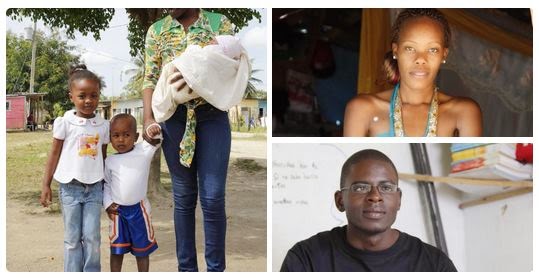
"The faces of statelessness in the DR. " For more follow @RobinGuittard of Amnesty Caribbean

Even before this deadline, the Dominican Republic has started deporting people without due process. One such illegal mass deportation of 51 people took place on January 27th.

According to Amnesty, 30 in this group were Dominican-born children, others included some of their mothers and 14 other adults. They say "more mass deportations of Dominicans of Haitian descent and Haitian migrants are feared."

Read Amnesty's full report here: http://www.amnestyusa.org/sites/default/files/uaa02015.pdf 

Take Action

So what to do in light of this grave issue? In response to Amnesty's call, you can e-mail Dominican officials urging them to protect these recent deportees and to stop all illegal deportations. 

Address letters to: José Ramón Fadul, Minister of Interior and Police (info@mip.gob.do); Lic. Jose Ricardo Taveras, Director of Migration (info@migracion.gov.do); Andrés Navarro García, Minister of Foreign Affairs (relexteriores@mirex.gob.do) and let Amnesty know what you've done by e-mailing uan@aiusa.org afterwards with "UA 20/15" in the subject line.

Your letter can include a version of the following message drafted by Ted, but please feel free to personalize it according to your own reactions to this news.

Dear Ministers and Director,

I write today in response to the 27 January 2015 expulsion of 51 people, including 30 Dominican-born individuals, from the Dominican Republic without due process.

I write, urging you to:

-allow these children and their families to enroll in the appropriate naturalization and regularization schemes;
-not to use naturalization and regularization procedures to detect alleged undocumented migrants and to stop all deportations of similar measures against applicants in the naturalization and regularization schemes;
-fulfill the Dominican Republic’s obligations under international law, which prohibit arbitrary and collective expulsions, and to ensure that all those facing removal from the Dominican Republic have their cases individually examined in a fair and transparent procedure, where they can challenge the authorities’ decisions and have their case reviewed.

Please consider these requests and redress this situation and the circumstances that precipitated it as soon as possible.


In sincere hope of policies that affirm the dignity of every human being,

(Your name and country)

Learn more


Part of being an advocate is to learn more and to stay engaged. 

If you would like more background on this issue read the reports linked to above as well as No more hope for tens of thousands stateless and at risk of expulsion if residence deadline expires. For interesting history on the intensity of DR/Haiti relations we recommend this short film on the subject.